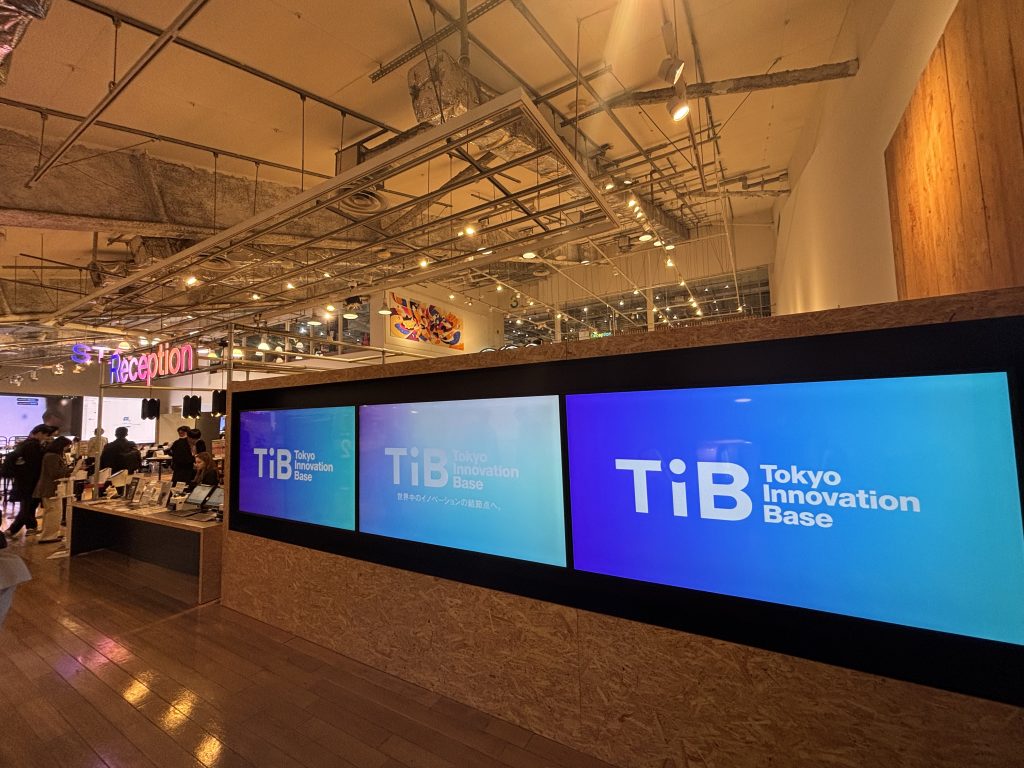
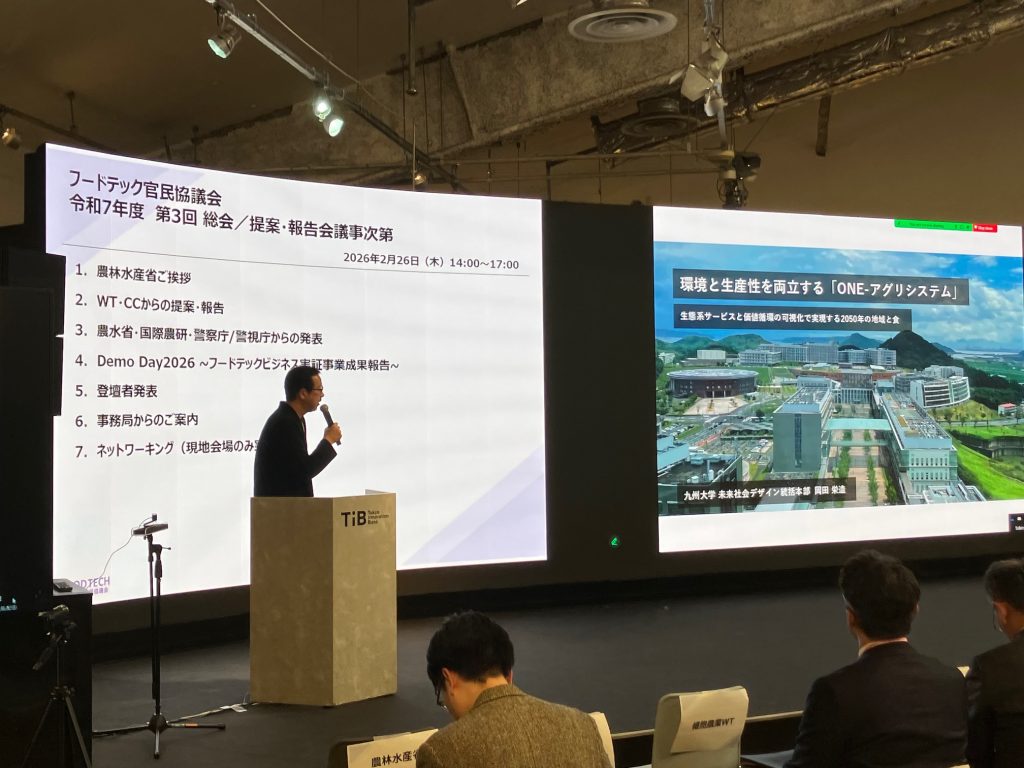
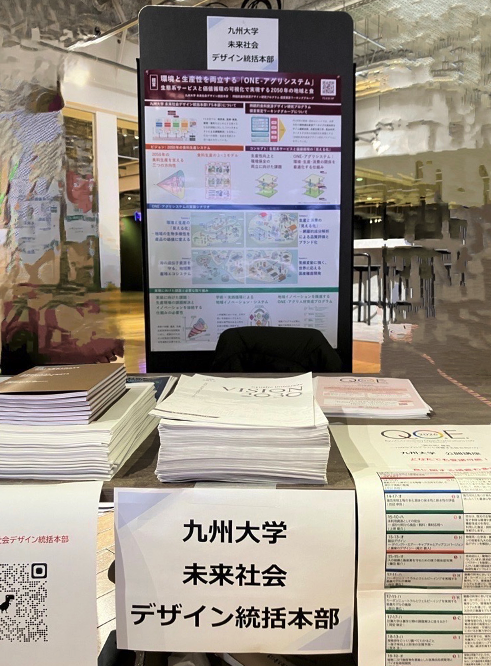
At the Council for Public-Private Partnership in Food Technology FY2025 (R7) 3rd General Meeting (Figure 1), held on Thursday, February 26, 2026, Professor. Okada, Design Director of the Think Tank Unit, delivered a presentation on the proposal “ONE-Agri System: Integrating Environment and Productivity,” which was recently released by the In2FS. In addition, at the exhibition booth at the venue, we introduced the proposal as well as the “Sustainable Food Resource Design Research Program” (Sustainable Food SIF) being promoted by the Environment and Food Unit.
The Council for Public-Private Partnership in Food Technology was established in 2020 under the leadership of the Ministry of Agriculture, Forestry and Fisheries (MAFF), with the participation of a wide range of stakeholders from industry, academia, and government. Its purpose is to promote public-private collaboration that supports the resolution of challenges in shared domains and the creation of new markets. Specifically, it aims to build a resource-circulating food supply system that contributes to the development of the food, agriculture, forestry, and fisheries sectors and strengthens food security, as well as to secure a domestic technological foundation for emerging technologies that realize a high quality of life (QOL) in food.
On the day of the general meeting, a broad spectrum of participants—including representatives from central government ministries and agencies, corporations, startups, banks, and universities—gathered at the venue. In addition to activity reports from the Council, there were presentations by MAFF and other organizations, reports from startups related to food tech promotion, and introductions of initiatives from various fields. This provided a valuable opportunity to hear many insightful perspectives that we do not usually encounter. Participants were also seen listening attentively to Prof. Okada’s presentation on the proposal (Figure 2).
During the networking session following the presentations, representatives from government agencies, corporations, startups, and universities visited our university’s exhibition booth (Figure 3). We were able to engage in discussions about the content of the proposal and related initiatives of the In2FS, including potential future collaborations. We also had meaningful exchanges with other startups and university representatives, gaining many insights into how the knowledge and technologies held by universities can be effectively implemented in society. We strongly felt that close collaboration among stakeholders responsible for different stages is essential for promoting efficient and effective social implementation.
Going forward, we will continue to seek concrete collaborations with various stakeholders while further disseminating the proposal and exploring specific actions based on its recommendations.